
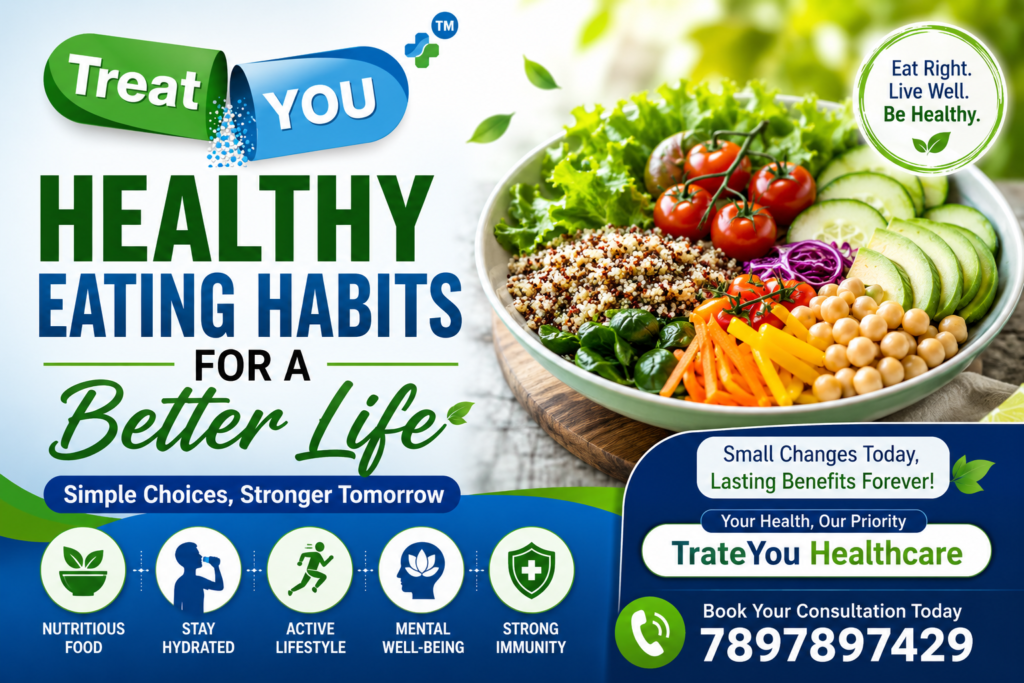
Introduction
In today’s fast-paced world, maintaining healthy eating habits has become more important than ever. The food choices we make every day directly impact our physical health, mental well-being, energy levels, and overall quality of life.
A balanced and nutritious diet not only helps prevent chronic diseases but also improves immunity, supports healthy weight management, and boosts mental health. Developing healthy eating habits is one of the simplest yet most powerful ways to live a longer, healthier, and happier life.
Let’s explore the essential healthy eating habits that can transform your lifestyle and improve your overall well-being.
1. Start Your Day with a Nutritious Breakfast
Why Breakfast Matters
Breakfast is often called the most important meal of the day for a reason. After several hours of fasting during sleep, your body needs fuel to kickstart metabolism and provide energy for daily activities.
Benefits of a Healthy Breakfast
- Improves concentration and productivity
- Boosts metabolism
- Controls hunger throughout the day
- Supports healthy weight management
- Provides essential nutrients
Healthy Breakfast Options
- Oatmeal with fruits and nuts
- Whole-grain toast with eggs
- Greek yogurt with berries
- Smoothies made with fresh fruits and vegetables
2. Include More Fruits and Vegetables in Your Daily Diet
The Power of Natural Nutrition
Fruits and vegetables are packed with vitamins, minerals, antioxidants, and fiber that help protect the body against illnesses and promote optimal health.
Benefits of Fruits and Vegetables
- Strengthen the immune system
- Improve digestion
- Support heart health
- Reduce the risk of chronic diseases
- Promote healthy skin and hair
Simple Ways to Add More Produce
- Add vegetables to every meal
- Choose fruits as snacks
- Include salads with lunch and dinner
- Try colorful seasonal fruits and vegetables
3. Stay Hydrated Throughout the Day
Water: The Foundation of Good Health
Many people underestimate the importance of proper hydration. Water plays a vital role in regulating body temperature, digestion, circulation, and nutrient absorption.
Benefits of Drinking Enough Water
- Improves digestion
- Supports healthy skin
- Enhances energy levels
- Helps remove toxins
- Reduces fatigue and headaches
Hydration Tips
- Drink 8–10 glasses of water daily
- Carry a reusable water bottle
- Limit sugary drinks and sodas
- Consume water-rich foods like cucumber and watermelon
4. Choose Whole Foods Over Processed Foods
Eat Real, Natural Foods
Processed foods often contain excess sugar, unhealthy fats, preservatives, and sodium that can negatively affect your health over time.
Whole Foods Include
- Fresh fruits
- Vegetables
- Whole grains
- Nuts and seeds
- Lean proteins
- Legumes
Benefits of Whole Foods
- Better digestion
- Improved heart health
- Stable energy levels
- Reduced inflammation
- Lower risk of obesity and diabetes
5. Practice Portion Control and Mindful Eating
Eat Smart, Not Just Less
Healthy eating isn’t only about what you eat—it’s also about how much and how mindfully you eat.
Tips for Portion Control
- Use smaller plates
- Avoid eating directly from packages
- Eat slowly and chew thoroughly
- Stop eating when comfortably full
Benefits of Mindful Eating
- Prevents overeating
- Improves digestion
- Helps maintain a healthy weight
- Creates a healthier relationship with food
6. Limit Sugar, Salt, and Unhealthy Fats
Protect Your Long-Term Health
Excessive consumption of sugar, sodium, and unhealthy fats can increase the risk of serious health conditions.
Health Risks of Poor Dietary Choices
- Obesity
- High blood pressure
- Heart disease
- Type 2 diabetes
- Fatty liver disease
Healthier Alternatives
- Choose natural sweeteners in moderation
- Use herbs and spices instead of excess salt
- Opt for healthy fats like olive oil, nuts, and avocados
7. Make Healthy Eating a Lifestyle, Not a Temporary Diet
Focus on Sustainable Habits
Many people follow strict diets that are difficult to maintain. Instead of short-term dieting, focus on creating lifelong healthy eating habits.
Long-Term Success Tips
- Set realistic goals
- Plan meals ahead
- Keep healthy snacks available
- Allow occasional treats in moderation
- Stay consistent rather than perfect
Remember, small daily improvements can lead to significant long-term health benefits.
Conclusion
Healthy eating habits are the foundation of a better life. By choosing nutritious foods, staying hydrated, controlling portions, and making mindful food choices, you can improve your physical health, mental well-being, and overall quality of life.
The journey toward better health doesn’t require drastic changes. Start with small, manageable steps and gradually build habits that support lifelong wellness.
Your body is your greatest asset—nourish it wisely and enjoy the benefits of a healthier, happier future.
Frequently Asked Questions (FAQs)
What are the most important healthy eating habits?
Eating a balanced diet, drinking enough water, consuming fruits and vegetables, limiting processed foods, and practicing portion control are among the most important healthy eating habits.
How much water should I drink daily?
Most adults should aim for approximately 8–10 glasses of water per day, although individual needs may vary.
Can healthy eating improve mental health?
Yes. A nutritious diet supports brain function, mood regulation, and overall mental well-being.
Is it okay to eat unhealthy foods occasionally?
Yes. Moderation is key. Occasional treats can be part of a balanced and sustainable healthy lifestyle.
Take the First Step Towards Better Health Today
At TrateYou Healthcare, we believe that prevention is better than cure. Our healthcare experts are dedicated to helping you achieve optimal health through personalized guidance, preventive care, and comprehensive wellness support.
Whether you’re looking to improve your nutrition, manage weight, boost immunity, or adopt a healthier lifestyle, we’re here to help.
📞 Book Your Consultation Today: 7897897429
TrateYou Healthcare
Your Partner in Health, Wellness, and Better Living.